
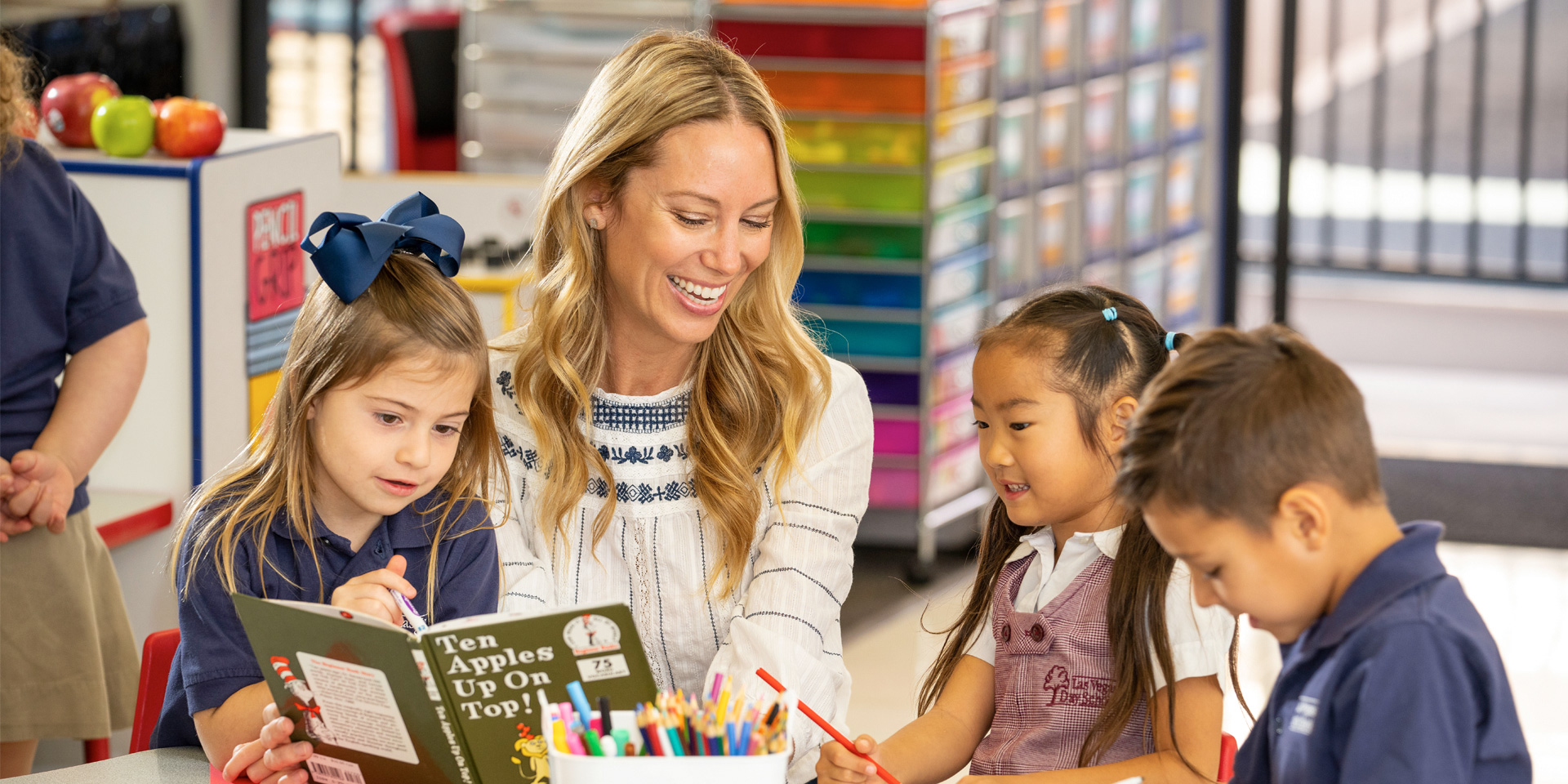
What Do Kids Learn in Kindergarten, and Is Your Child on Track?
Now that the school year is underway, a lot of parents are asking the same quiet question: what do kids learn in kindergarten, and is my child on track? This guide walks Las Vegas parents through what children learn across the kindergarten year, how to tell whether your child is tracking along the way, what they should know by the end, and what to expect from your child’s school as they grow.
Kindergarten is one of the biggest growth years of childhood. Children often arrive still learning their letters and, over the course of the year, begin sounding out words, writing sentences, counting and comparing numbers, and working as part of a classroom community. Every child moves at their own pace, so think of what follows as a friendly map of the year, not a scorecard.
One quick note before we dive in. If your child has not started kindergarten yet and you are wondering whether they are ready, our kindergarten readiness checklist covers the skills children typically have going in. This guide picks up from there: what happens once your child is in the classroom, how to know they are progressing, and what they will be able to do heading into first grade.
What Do Children Learn in Kindergarten?
Kindergarten is far more than letters and numbers. A high-quality kindergarten nurtures the whole child, and the National Association for the Education of Young Children describes children developing across several connected areas at once: physical skills, social and emotional skills, language and literacy, and thinking skills. In practice, that means a typical kindergarten day blends reading and writing, early math, hands-on science and social studies, movement and the arts, and plenty of practice getting along with others.
The year generally moves from foundational skills in the fall toward real reading, writing, and number work by spring. Here is what your child will be learning, area by area, followed by how to tell whether they are on track and what most children can do by the end of the year.
What Your Child Will Learn in Kindergarten, Area by Area
Below is a closer look at each part of the kindergarten curriculum and what children practice throughout the year. At Las Vegas Day School, this happens through a rigorous, teacher-led program that is engaging and joyful.
Reading and Phonics
Kindergarten is where formal reading begins, so your child does not need to arrive reading. Instruction usually starts with systematic phonics: matching letters to sounds and blending them into words. At LVDS, children build phonemic awareness starting with simple consonant-vowel-consonant words like cat and sun, then move up to blends, digraphs, and long vowels. Alongside decoding, they learn to read and recall high-frequency sight words, and small-group reading time focuses on decoding unfamiliar words, vocabulary, and comprehension. By spring, many kindergartners are reading short, simple books on their own.
Writing
Writing grows right alongside reading. Most children enter kindergarten with the proper pencil grip and letter formation, then move to building words and sentences. At LVDS, kindergartners write every day and keep journals, and over the year they try their hand at personal narratives, letters, short nonfiction reports, and simple persuasive and instructional writing. Early spelling is often invented spelling, which is a normal and healthy step as children connect sounds to letters.
Math
Early math in kindergarten is about number sense, not memorized arithmetic. Children learn to count, recognize and write numbers, notice patterns, and compare quantities using ideas like more, less, bigger, and smaller. At LVDS, the kindergarten curriculum builds counting, number sense, patterns, and beginning addition and subtraction. Children also name basic shapes and begin sorting and measuring the world around them.
Science and Social Studies
Kindergartners are natural investigators, and science taps right into that. At LVDS, hands-on science activities build curiosity and vocabulary as children observe, ask questions, and explore. Social studies introduces the ideas of community, classroom and family routines, and early civic concepts like fairness, rules, and taking care of shared spaces.
Specials: Spanish, Art, Music, Library, and PE
A full kindergarten education reaches beyond the core subjects. At LVDS, children take weekly enrichment specials, including Spanish, art, music, and physical education, each taught by a subject specialist, plus a weekly library story time. These classes build coordination, creativity, and confidence, and they give children a wide range of ways to shine.
Social-Emotional Learning and Character
Academics are only half of kindergarten. Learning to manage feelings, make friends, and work in a group is just as important, and it often shapes how smoothly the whole year goes. At LVDS, teachers are intentional about emotional regulation, friendship skills, and classroom community, and the program emphasizes courtesy, listening, respect, and communicating kindly with classmates. Children practice following routines, taking turns, resolving small conflicts calmly, and working independently on a task.
How Do You Know If Your Child Is on Track in Kindergarten?
If your child just started kindergarten, most of the year’s learning is still ahead of them, so try not to measure them against the end-of-year list too soon. In kindergarten, being on track is less about hitting a fixed benchmark on a certain date and more about steady forward movement. A child who could not sound out a single word in September and is blending simple words by December is right where they should be, even if a classmate is a few steps ahead.
Here is a rough sense of what tracking well can look like as the year unfolds. Every child is different and teachers expect a wide range, so treat this as a gentle guide rather than a checklist.
Early in the year (fall):
• Settling into routines, separating from parents with ease, and following the daily schedule
• Recognizing many letters and their sounds, and starting to hear the first sound in a word
• Counting a small set of objects accurately, recognizing numbers, and sorting by color or shape
• Holding a pencil properly, writing their name, and beginning to make friends and take turns
Midyear (winter):
• Blending simple, decodable words like cat and sun, and reading a few common sight words
• Writing a short sentence, often with invented spelling
• Counting higher, comparing more and less, and trying beginning addition and subtraction
• Working more independently and staying with a task a little longer
Later in the year (spring):
• Reading short, simple sentences and familiar words with growing confidence
• Writing a sentence or two about a picture or an experience
• Counting to 100 and adding and subtracting small numbers
• Cooperating, resolving small conflicts calmly, and managing their own belongings
Beyond the specific skills, the healthiest signs are often about attitude. A child who is tracking well usually grows more willing to try new things, bounces back from mistakes, talks about their day, and shows small, steady wins over the weeks. If your child is enjoying school and inching forward, that is the heart of being on track.
And if something feels off, you do not have to wonder alone. The clearest read on your child’s progress comes from their teacher, who sees them learning every day. A quick check-in can tell you far more than any online checklist, and it is exactly the kind of conversation a good kindergarten program welcomes.
What Should a Child Know by the End of Kindergarten?
By the time kindergarten wraps up, most children have grown enormously and are ready for the step up to first grade. Here is a snapshot of what many kindergartners can do by the end of the year. Remember that children develop at different rates, so a child who is still working on a few of these is completely normal. Progress matters far more than checking off every box.
Reading and literacy:
• Recognizes all 26 letters, uppercase and lowercase, and their sounds
• Reads words and short sentences
• Recognizes common sight words
• Writes their first and last name
• Writes a few simple sentences about a picture or experience, often with invented spelling
Math:
• Count to 100 by ones and by tens
• Recognizes and writes numbers
• Adds and subtracts small numbers within about 5 to 10
• Names basic shapes and sorts objects by size, color, or type
• Understands comparisons like more, less, and equal
Social, emotional, and independence:
• Follows classroom rules and routines
• Works independently on a task and stays with it
• Cooperates, shares, and takes turns with classmates
• Expresses needs and feelings with words
• Manages belongings, uses the bathroom independently, and handles buttons, zippers, and lunch containers
At LVDS, the goal is for children to leave kindergarten as confident learners who are well prepared for first grade.
What to Expect from Your Child’s Kindergarten and School
A big part of feeling confident about kindergarten is knowing what a strong program should offer, so you can recognize it when you see it. Here is what to expect from a high-quality kindergarten, and what that looks like at Las Vegas Day School.
• A clear, purposeful curriculum. You should expect more than play-filled days. A strong kindergarten follows a real plan that builds reading, writing, and math step by step while keeping learning joyful. At LVDS, that means a rigorous, teacher-led program that moves from foundational skills toward reading and number work by spring.
• Teachers who truly know your child. In a good kindergarten, your child is a name and a personality, not a seat number. At LVDS, small kindergarten class sizes let teachers identify learning differences early, adapt instruction to each child, and give real attention every day.
• Regular, honest communication. You should expect to hear how your child is doing, and not only when something is wrong. At LVDS, teachers proactively communicate with parents, so you stay in the loop on both progress and next steps, with a clear person to ask whenever you have a question.
• A full day with real enrichment. A full day gives children room to learn deeply instead of rushing. LVDS kindergarten runs from 8:25 AM to 2:50 PM, with before and after school care available for working families, plus weekly specials in Library, Spanish, Art, Music, and Physical Education taught by subject specialists.
• Attention to character, not just academics. Expect a program that takes kindness and self-control as seriously as letters and numbers. At LVDS, kindergarten emphasizes courtesy, listening, respect, and communicating with classmates in a positive way, right alongside the academic curriculum.
• A welcome for families. A good school gives you room to be involved without pressure. At LVDS, parents are welcome to read to the class and join class celebrations, though volunteering is never required. Everyday practicalities like morning and afternoon snacks and school supplies are included in your yearly tuition.
• A clear path to what comes next. Kindergarten should set up first grade, not just fill a year. Because LVDS is a PS-8 school, children step into the accelerated elementary curriculum within the same familiar community, which makes the move to first grade a smooth one.
Kindergarten Learning at Las Vegas Day School
At Las Vegas Day School, kindergarten sits within the Kinderschool, our dedicated early childhood division that encompasses preschool through kindergarten. Teachers meet children where they are and build from there, pairing a rigorous academic curriculum with genuine care for how young children grow.
As a tuition-only school founded in 1961, LVDS is Nevada’s oldest non-sectarian private PS-8 school and has helped Las Vegas families make this step for more than 65 years. The tuition-only model keeps the focus on your child’s learning, and because the people who teach your kindergartner are part of the same school that will carry them all the way to eighth grade, the community stays familiar year after year. Learn more about our private kindergarten program.
How to Support Your Kindergartner’s Learning at Home
You are your child’s first teacher, and the best support at home looks a lot like everyday play, no flashcards or pressure required. A few simple habits go a long way:
• Read together every day and talk about the story, the pictures, and what might happen next
• Count real things: stairs on the way up, crackers at snack time, or cars on a drive
• Practice writing their name and a few words, celebrating every attempt
• Play sound games like I Spy with beginning sounds, and point out sight words on signs and menus
• Let them dress themselves, pack their backpack, and open their own containers, even when it takes longer
• Play simple board games to practice taking turns, waiting, and being a good sport
• Name feelings out loud and talk through big emotions, so words become the go-to tool
Short, positive moments woven through the week do far more than long drills, and they protect your child’s love of learning.
What If Your Child Needs More Support or a Bigger Challenge?
First, take a breath. If your child is still working toward some of these skills, it does not mean they are behind for good. It simply means there is more growing to do, which is exactly what this year is for.
Small classes help here: when teachers work with fewer children, they can catch where a child needs support early, communicate with you, and adjust. Talk with your child’s teacher, keep practicing at home, and lean on early support when it helps.
If your child is racing ahead, small classes matter just as much. Teachers can offer harder books, richer writing prompts, and extra challenges so learning stays exciting. You can see how our small class sizes and student-teacher ratio make that individual attention possible every day.
And if your child has not started kindergarten yet, a strong preschool and Pre-K program builds the foundation these skills grow from.
Frequently Asked Questions
What do kids learn in kindergarten?
Kindergarten covers reading and phonics, writing, early math, hands-on science and social studies, and enrichment like Spanish, art, music, and physical education. Just as important, children learn social and emotional skills: following routines, cooperating, and expressing feelings. The year moves from foundational skills toward real reading, writing, and number work by spring.
How do I know if my child is on track in kindergarten?
Being on track in kindergarten means making steady progress, not hitting a fixed score on a certain date. Early in the year, children are still settling in and mastering letters and sounds. By spring, many are reading simple sentences and adding small numbers. The best gauge is your child’s own growth over time, plus a conversation with their teacher, who sees them learning every day.
What should my child be able to do by the end of kindergarten?
Most kindergartners finish the year knowing all their letters and sounds, reading sentences, knowing sight words, writing their name and short sentences, counting to 100, and adding and subtracting small numbers. They can also follow routines, work independently, and cooperate with classmates. Every child develops at their own pace, so steady progress matters more than mastering every item.
What should I expect from my child’s kindergarten and school?
Expect a clear, purposeful curriculum, teachers who know your child by name, and regular, honest communication about progress. A strong kindergarten also offers a full day with enrichment and pays attention to character, not just academics. At LVDS, small classes let teachers proactively communicate with parents and adapt to what each child needs.
Do kindergartners learn to read?
Yes. Kindergarten is where formal reading begins, so children do not need to arrive reading. Instruction focuses on phonics, sight words, and comprehension. At LVDS, kindergartners build phonemic awareness from simple consonant-vowel-consonant words up through blends, digraphs, and long vowels, and many are reading short sentences by the end of the year.
How much math do kindergartners learn?
Kindergarten math centers on number sense: counting, recognizing and writing numbers, naming shapes, sorting, spotting patterns, and beginning addition and subtraction. At LVDS, the kindergarten curriculum builds counting, number sense, patterns, and beginning addition and subtraction.
Is what my child learns in preschool different from kindergarten?
Yes. Preschool and Pre-K focus on readiness skills like letter and sound recognition, listening, and early social development, while kindergarten begins formal reading, writing, and math. If you are deciding whether your child is ready to start, our guide on preparing your child for kindergarten walks through enrollment ages and how to think about them.
What does LVDS kindergarten teach?
The LVDS kindergarten curriculum blends phonics-based reading, daily writing, foundational math, hands-on science and social studies, and weekly specials in Library, Spanish, Art, Music, and Physical Education taught by subject specialists. Children leave kindergarten as confident learners who are well prepared for first grade. See the full kindergarten program for details.
See Kindergarten Learning at LVDS for Yourself
The best way to understand what your child will learn, and whether LVDS is the right fit, is to visit in person. Come see our small kindergarten classrooms, meet the teachers who make the difference, and picture your child here. Schedule a campus tour today, and take the next step with confidence.